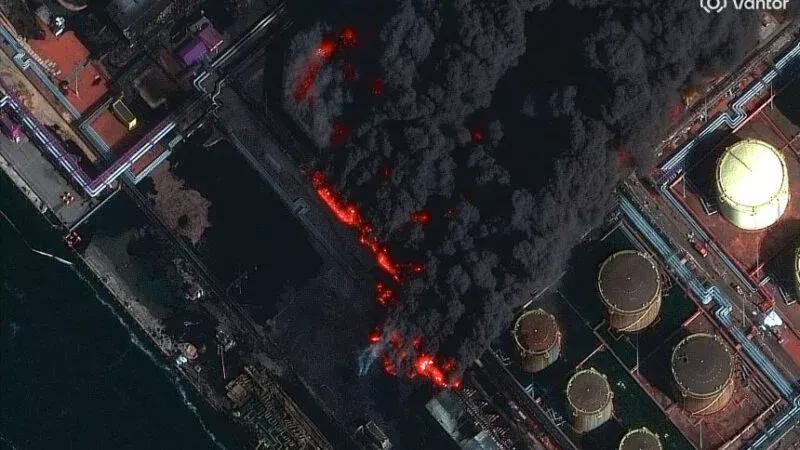
Ukrainian long-range drones have accelerated a summer-started campaign against Russia’s energy backbone, claiming 10 major strikes in March 2026 alone. Confirmed targets: Ust-Luga Baltic terminal (multiple hits, fires, Zelensky states 40% capability remains), nearby Primorsk (ongoing visible fires), Yaroslavl refinery (direct hit, fire, civilian spillover acknowledged) and Saratov Rosneft facility. Geolocated imagery and Russian emergency statements confirm damage to loading stands, tank farms and processing units.
This occurs precisely as Russia captures a revenue windfall. Pre-Middle East conflict, Russian crude traded at a deep discount; now it commands a premium in spots. US Treasury suspension of sanctions on Russian crude already at sea has eased flows further. Analysts estimate oil-related budget revenue (≥1/3 of total) may have doubled in the past month. Moscow is now discussing re-imposition of a gasoline export ban effective April 1 — previously lifted in January — citing domestic market strain from “unscheduled refinery maintenance” and the port fires, per TASS and Kommersant.
Zelensky explicitly frames the strikes as retaliation for Russian winter attacks on Ukrainian power infrastructure and criticizes the sanctions relief as enabling Russian-Iranian coordination. The net effect is asymmetric: physical disruption to export infrastructure versus a price-driven cash surge for the Kremlin. Immediate production/export losses are real but appear partially offset by elevated margins and rerouting potential. Market participants must now price both constrained Russian barrels and Russia’s improved fiscal breathing room to sustain the war.
// Share Your Analysis