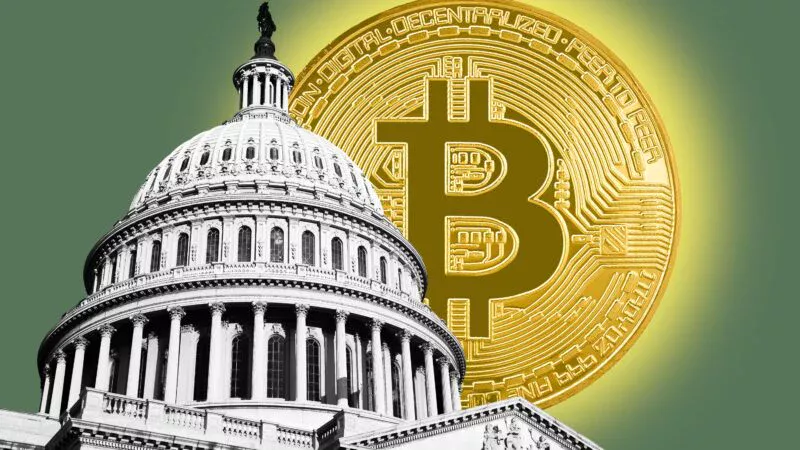
Senate Crypto Bill Advances: Stablecoin Compromise Crushes Bank Opposition

May 9, 2026 | Crypto | Polyminute News | No comments
Senate Crypto Bill Advances: Stablecoin Compromise Crushes Bank Opposition

Senate Banking Committee advances major U.S. crypto regulatory framework on May 14 despite banking industry pushback. Compromise language on stablecoin rewards has flipped Coinbase and key issuers to support side; full GOP committee unity expected while Democrats remain split over politician trading restrictions. First real legislative momentum since January postponement signals regulatory clarity is finally arriving for digital assets.

The Senate Banking Committee will hold a committee vote on May 14 on a comprehensive crypto market-structure bill that establishes rules of the road for stablecoins, custody, and broader digital-asset activities. The move represents a clear defeat for the traditional banking lobby, which has fought the legislation on the grounds that stablecoin yield/reward mechanisms still encroach on bank deposit franchises.

Chairman Tim Scott (R-SC) has secured near-unanimous Republican support on the 13-member panel. A last-minute compromise drafted by Sens. Thom Tillis (R-NC) and Angela Alsobrooks (D-MD) has brought Coinbase and major stablecoin issuers on board by carving out a narrow safe harbor for rewards that are structured not to compete directly with bank savings-account yields. Banks, however, continue to argue the language “falls short” of protecting deposits and have signaled they will keep fighting.

The bill was originally scheduled for January advancement but was pulled after dual lobbying pressure from both industries. Its revival now, with crypto industry alignment, indicates the political window is closing fast. While the committee vote is expected to fall along party lines, sponsors have already telegraphed that further tweaks are possible between committee passage and a potential Senate floor vote. Open questions remain on Democratic support—particularly around provisions limiting politicians’ personal digital-asset trading—and whether the House will accept the Senate product without major changes. Time pressure is acute; legislative calendars are tightening.

For markets, this is the highest-conviction regulatory signal since the 2024 election cycle. The bill does not create a full “crypto act” but delivers the first credible U.S. federal framework for stablecoins—the on-ramp asset class that underpins DeFi, payments, and tokenized real-world assets. Passage at committee level alone removes a major overhang that has capped institutional capital deployment for 18 months.

01

First-Order Effects

Obvious, immediate impacts
  • Crypto equities (COIN, MSTR, MARA, RIOT) and spot Bitcoin/ETH immediately price in higher probability of eventual passage, triggering pre-vote short-covering and sentiment-driven rally.
  • Traditional bank stocks (JPM, BAC, C) face targeted selling pressure as the market registers stablecoin yield products as direct deposit substitutes.
  • Stablecoin issuers accelerate issuance and marketing of reward-bearing products under the new safe-harbor language, expanding total stablecoin supply within weeks.
  • Near-term volatility in crypto basis and funding rates spikes as traders position for committee outcome and subsequent floor-vote odds.
02

Second-Order Effects

Cross-sector · cross-geography · time-lagged
  • Deposit betas at regional and community banks rise as retail and corporate treasuries migrate marginal cash to higher-yielding, regulated stablecoins, compressing net interest margins.
  • DeFi TVL and on-chain settlement volumes expand rapidly once stablecoin regulatory clarity reduces counterparty and compliance risk premia.
  • Foreign stablecoin issuers (Tether, Circle non-U.S. entities) begin structured U.S. licensing processes to capture the new onshore premium, accelerating USD stablecoin dominance versus offshore alternatives.
  • Corporate treasuries quietly add stablecoin sleeves to cash-management mandates, creating structural bid for short-duration U.S. Treasuries used as reserves.
03

Alpha Layer — Opportunities

Trades · strategic positioning · business impacts
  • U.S. cements first-mover regulatory advantage in crypto, forcing EU (MiCA) and Asia to harmonize or lose talent and capital—market currently prices this as neutral rather than decisive American structural win.
  • Tokenization of real-world assets (Treasuries, credit, real estate) scales under a single federal regime, eroding traditional custodians’ moat and creating multi-trillion-dollar addressable market that legacy finance is systematically under-modeling.
  • Politician-trading restrictions in the bill, if retained, quietly remove a key source of congressional resistance to future pro-crypto legislation—consensus views this as noise; it is actually a self-reinforcing political flywheel.
  • Asymmetric long: U.S.-regulated stablecoin infrastructure, custody, and RWA platforms; asymmetric short: high-beta regional banks whose deposit franchises are most exposed to digital substitution. Consensus is pricing this as a modest regulatory tailwind; it is the beginning of parallel financial system formation inside the USD umbrella.

// Share Your Analysis