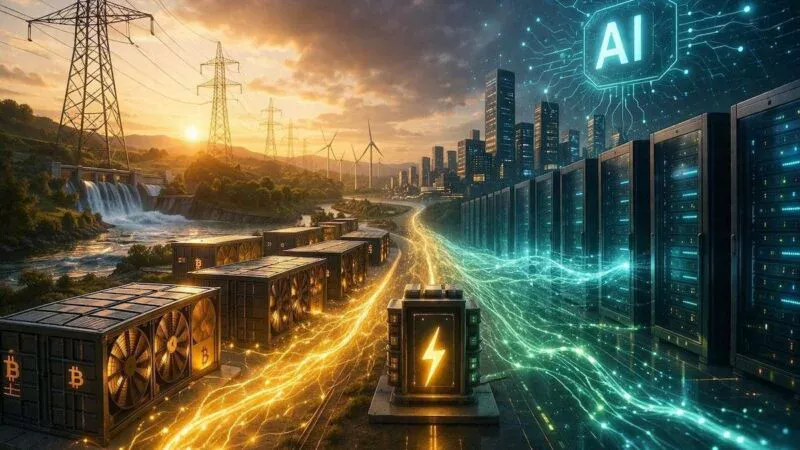
AI capex has entered a new regime. Consensus 2026 estimates now sit at $725 billion—up from $365 billion a year ago—led by Alphabet, Microsoft, Meta, Amazon, and Oracle. This is not incremental; it is larger than JPMorgan’s market cap and exceeds the combined value of every NFL franchise. The driver is power: every increment of compute requires proportional electricity, making energy the non-negotiable feedstock for hyperscaler growth.
Energy earnings cycles confirm the flywheel: strong results, AI-related capex as the explicit growth driver, and upward revisions accelerating. UBS quantifies $511 billion in generation-capacity additions alone by 2030 at a 3% CAGR—explicitly excluding transmission and distribution—yet already sees both natural gas and solar with “sold-out order books.” Evercore ISI pushes the total closer to $800 billion. Hyperscalers’ capex now exceeds operating cash flow, forcing external funding and creating a multi-year visibility tail for energy infrastructure.
Two micro-cap proxies are already pricing the pivot. Hut 8 (Miami-based energy infrastructure) closed a $9.8 billion deal last week; the stock reacted violently higher. Fluence Energy (battery storage) signed hyperscaler supply agreements, posted narrower losses, and doubled in a week—now trading above consensus 12-month targets. UBS adds Eaton, Brazil’s WEG, Johnson Controls, and Trane Technologies as direct power-equipment and efficiency tailwinds.
Credit markets are picking up the signal: BNP Paribas flags Taiwan’s AI-driven 14% GDP growth flowing into life-insurance premiums and foreign demand for long-end USD IG credit, with specific overweights in high-yield AI-infra debt, IG banks, and IG telecoms.
Oil provides the geopolitical counterpoint. Crude inventories built during COVID, drew down post-Ukraine, and rebuilt in 2024-25—creating a buffer that absorbed over 1 billion barrels “lost” since the Iran conflict began. JPMorgan’s Natasha Kaneva expects the Strait of Hormuz to reopen in June “one way or another,” but warns daily draws will hit operational stress levels by early June if transit risk persists. The energy-AI thesis is therefore not isolated; it collides with a tightening oil macro.
Bottom line: markets are living through a once-in-a-generation capital cycle where AI spend is the forcing function for energy. The obvious winners are the hyperscalers themselves; the asymmetric ones are the power enablers still flying under most radar screens.
// Share Your Analysis