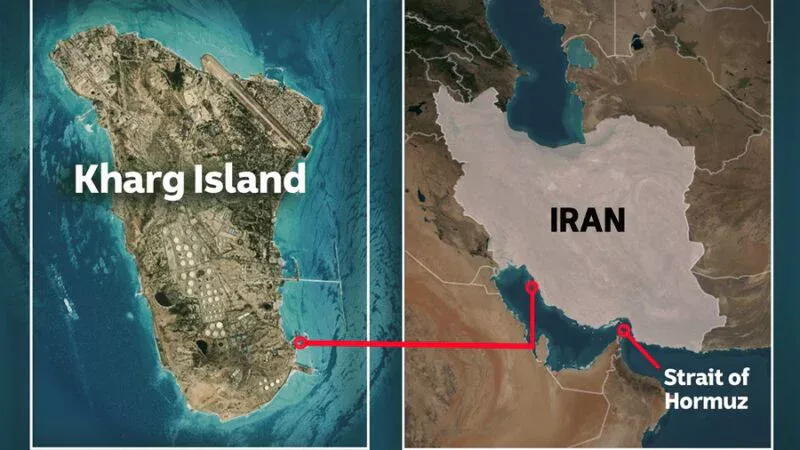
Multiple Strikes Hit Iran’s Kharg Island – 90% of Crude Exports at Risk

Apr 7, 2026 | Geopolitics 🇮🇷 Iran | Polyminute News | No comments
Multiple Strikes Hit Iran’s Kharg Island – 90% of Crude Exports at Risk

Iranian state media (Mehr News) reports multiple strikes on Kharg Island, the Persian Gulf hub handling ~90% of Iran’s oil exports. This marks the first reported direct targeting of energy infrastructure since US-led strikes in March 2026 deliberately spared it. No US/Israeli confirmation yet; explosions confirmed via local reporting. Oil markets face immediate volatility.

Iranian media reports explosions from multiple strikes on Kharg Island today (April 7, 2026), escalating the 2026 Iran conflict that began with US-Israeli airstrikes on Feb 28. Kharg is Iran’s primary oil export terminal: a fortified offshore facility processing the vast majority of its crude shipments, generating the regime’s critical hard-currency revenue under sanctions.

Earlier US strikes (March 13-14) hit only military targets on the island while explicitly preserving oil infrastructure as leverage against Strait of Hormuz disruptions. Trump has repeatedly warned of “obliterating” energy facilities or even seizing the island if shipping lanes remain closed. Today’s reported strikes cross that threshold, per Iranian accounts.

No independent verification or US/Israeli statements yet; IDF claims no knowledge. Situation fluid, but the signal is unambiguous: pressure on Iran’s economic jugular has intensified. Markets are pricing this as a high-impact catalyst—oil futures already moving on unconfirmed reports, with consensus underestimating sustained disruption risk given Kharg’s irreplaceable role in Iran’s export chain.

01

First-Order Effects

Obvious, immediate impacts
  • Oil exports from Iran (2-2.5 mbpd baseline) face immediate disruption risk, tightening global supply by ~1% and spiking Brent/WTI 5-15% intraday on confirmation.
  • Energy equities (upstream, midstream, oil majors with non-Iran exposure) rally sharply; broad risk assets sell off on geopolitical premium.
  • USD and gold bid as safe-havens amid flight-to-safety flows.
  • Iran’s rial weakens further; regime cash flow squeezed within days, limiting IRGC/proxy funding.
  • Strait of Hormuz insurance premiums and shipping rates jump 20-50% preemptively.
02

Second-Order Effects

Cross-sector · cross-geography · time-lagged
  • China and India (Iran’s top discounted crude buyers) face higher import costs and potential supply rerouting, adding 0.3-0.5% to their CPI within quarters.
  • Gulf producers (Saudi, UAE) gain windfall revenue but face heightened proxy attack risk from Iranian retaliation.
  • Global inflation expectations reprice higher, forcing delayed Fed/ECB easing and pressuring EM currencies.
  • Defense and cybersecurity stocks surge as markets anticipate broader proxy/network escalation.
  • Behavioral shift: tanker trackers and insurers reroute flows, creating short-term logistics bottlenecks in Asia-Europe routes.
03

Alpha Layer — Opportunities

Trades · strategic positioning · business impacts
  • Consensus underprices regime collapse risk—sustained Kharg downtime starves Tehran faster than sanctions ever could, accelerating internal fractures while markets price only “short war premium.”
  • Long-term de-dollarization narrative accelerates: BRICS+ accelerates non-USD oil settlement pilots; Russia/China deepen Iran energy security pacts.
  • Asymmetric upside in US shale/oilfield services and non-OPEC+ producers as structural supply diversification premium embeds.
  • Narrative flip: “maximum pressure 2.0” validates Trump doctrine, shifting investor positioning toward energy security over green transition timelines.
  • Market underpricing opportunity: vol-of-vol in energy derivatives and selective EM energy credits where Kharg damage proves limited vs. priced-in Armageddon scenarios.

// Share Your Analysis