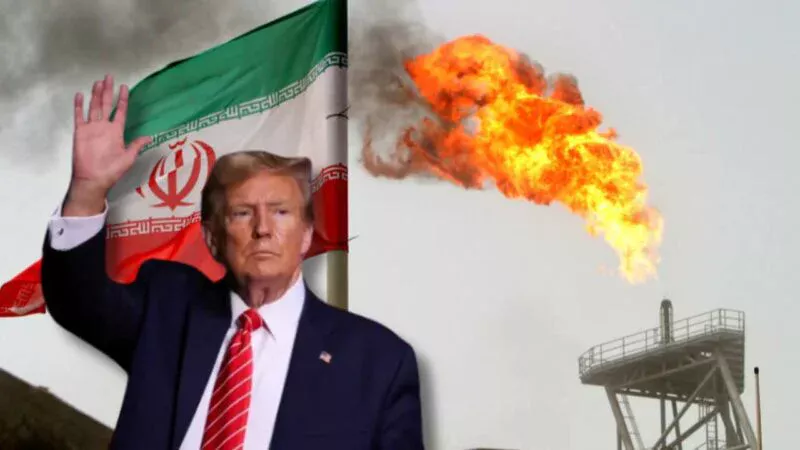
Trump has publicly tested the idea of U.S. control over Iranian oil infrastructure as a dual-purpose weapon: locking in American energy dominance while surgically restricting Beijing’s access to Iranian barrels. The logic is vintage Trump—commodity control is power projection. By choking Iran’s export flows (heavily tilted toward China), Washington could simultaneously tighten the screws on Beijing’s refining system and supply-chain resilience without a direct trade-war escalation.
The proposal is still embryonic. No operational blueprint has surfaced, and Trump himself flagged American fatigue with Middle East quagmires. Execution would demand sustained military presence, invite international legal challenges, and risk domestic backlash. Yet the mere articulation serves as high-decibel signaling: it raises the shadow price of Iranian oil, forces China to reveal its true vulnerability, and recalibrates expectations around future U.S. energy statecraft.
Critically, Beijing has spent years de-risking exactly this scenario. Strategic crude reserves, ramped-up domestic output, and aggressive renewable build-out have materially lowered its exposure to any single Persian Gulf chokepoint. Markets that treat this as a binary “seize or not” event are missing the asymmetric preparation gap: U.S. upside is capped by political constraints; China’s downside is already partially hedged.
In macro terms, the story is less about imminent barrels disruption and more about narrative repositioning. It reframes U.S. energy policy from “independence” to “offensive leverage,” injects fresh volatility into the term structure of oil, and forces capital allocators to reprice long-term geopolitical risk premia across energy, shipping, and China-exposed industrials. Until concrete steps emerge, this remains a high-signal probe rather than policy—priced by markets at the margin but under-analyzed for its second- and third-derivative effects on global capital flows.
// Share Your Analysis