Iranian Drone & Missile Strikes on Gulf Aluminum Giants Trigger Global Supply Crisis

Mar 31, 2026 | Commodities | Polyminute News | No comments
Iranian Drone & Missile Strikes on Gulf Aluminum Giants Trigger Global Supply Crisis

Iranian attacks damaged Emirates Global Aluminium’s Al Taweelah smelter and hit Aluminium Bahrain, knocking out key capacity in a region supplying 9% of world aluminum. With the Strait of Hormuz closed and exports frozen, LME prices surged 3.5% to $3,381/t — levels unseen since 2022 — as analysts warn of a full-year market deficit and lasting industry reshuffle.

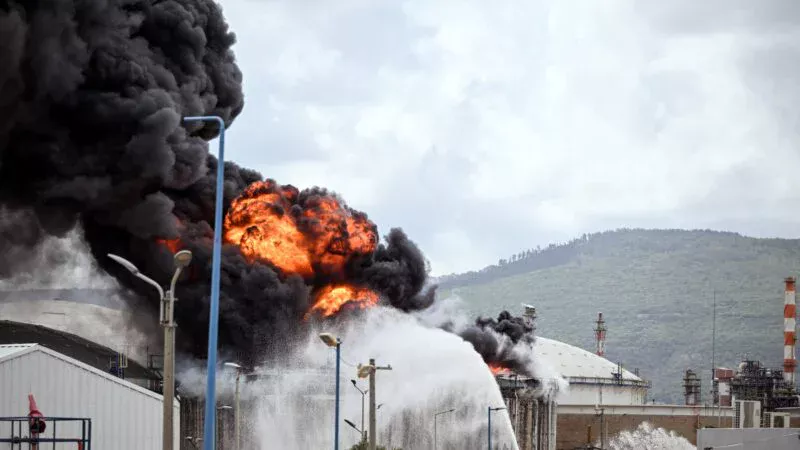
Iranian drones and missiles struck two of the Gulf’s largest aluminum producers on Saturday: Emirates Global Aluminium (EGA) and Aluminium Bahrain. EGA confirmed “significant” damage to its 1.6 million tonne Al Taweelah smelter and reported injuries. The attacks compound a month-long export paralysis caused by Iran’s effective closure of the Strait of Hormuz.

The Gulf accounts for ~9% of global primary aluminum supply. With shipments blocked, physical metal is trapped regionally while futures reacted instantly: LME aluminum opened +5.5% at $3,492/t before closing +3.5% at $3,381/t — the highest since April 2022. Prices are now up ~10% since the wider conflict began Feb 28.

Macquarie’s base case already assumed a 20% regional capacity cut (800–900 kt loss in 2026), sufficient to flip the global market into outright deficit. S&P Global Energy warns that persistent damage “could reshape the industry,” moving prices from temporary softness to structurally tighter supply. China, the world’s largest producer, is officially capped at 45.5 Mt/year for emissions reasons; idle smelters exist but analysts disagree sharply on how quickly Beijing can or will release incremental tonnes.

Aluminum’s role across EVs, aerospace, construction, solar, and packaging means the shock transmits directly into downstream costs. The event marks the first time geopolitical disruption has forced a meaningful re-pricing of a major base metal in real time.

01

First-Order Effects

Obvious, immediate impacts
  • LME aluminum futures spike 3.5% to $3,381/t, briefly touching four-year highs on immediate physical supply fears.
  • EGA’s 1.6 Mt Al Taweelah smelter suffers significant damage, removing near-term output with repair timeline unknown.
  • Gulf aluminum exports (9% of global supply) remain frozen by Strait of Hormuz closure, creating regional oversupply and global shortfall.
  • Operational safety concerns trigger force-majeure reviews and insurance claims across Middle East smelters.
  • Commodity investor sentiment shifts to risk-on for aluminum versus broader metals complex.
02

Second-Order Effects

Cross-sector · cross-geography · time-lagged
  • Downstream cost inflation hits auto OEMs, solar manufacturers, and construction firms, compressing margins and prompting delayed capex.
  • European and North American buyers accelerate spot purchases from Canada, Norway, and Russia, tightening non-Gulf supply chains.
  • Freight and war-risk insurance premiums for any residual Middle East metal routes surge, raising delivered costs even for non-Gulf origin material.
  • Inventory hoarding by Tier-1 suppliers creates artificial spot tightness and widens futures-physical basis.
  • Regional power demand in the Gulf softens marginally as damaged smelters idle, easing short-term LNG/electricity strain but signaling deeper industrial slowdown.
03

Alpha Layer — Opportunities

Trades · strategic positioning · business impacts
  • Western governments and corporates accelerate “friend-shoring” of aluminum capacity; markets currently underprice multi-year investment tailwinds for Australia, Canada, and Iceland producers.
  • China’s output-cap narrative cracks: Beijing faces domestic pressure to relax 45.5 Mt ceiling, creating asymmetric upside if political calculus shifts faster than consensus expects.
  • Geopolitical risk premium embeds permanently into base-metals pricing, ending the post-2022 “China-only” supply narrative and favoring volatility traders in aluminum futures.
  • Underpriced opportunity in aluminum-linked equities outside the Gulf (e.g., low-cost Western smelters) versus consensus focus on near-term price mean-reversion.
  • If Hormuz closure persists, capital reallocates from Gulf-dependent industrials to diversified or domestic critical-materials plays, a rotation the market has not yet discounted.

// Share Your Analysis