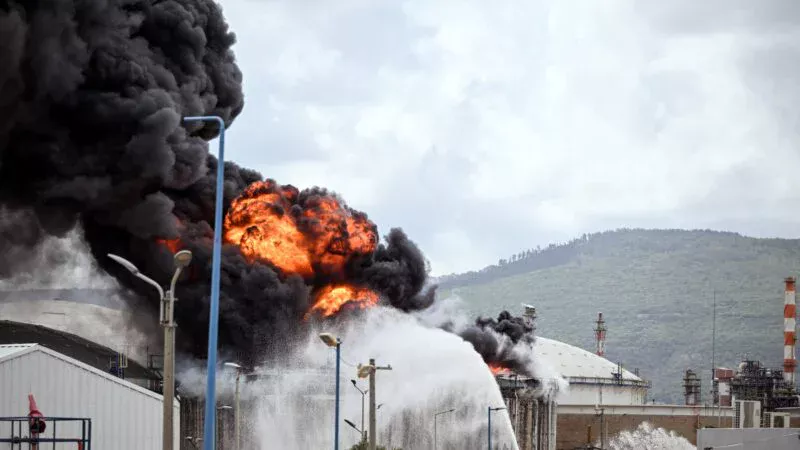
Iranian drones and missiles struck two of the Gulf’s largest aluminum producers on Saturday: Emirates Global Aluminium (EGA) and Aluminium Bahrain. EGA confirmed “significant” damage to its 1.6 million tonne Al Taweelah smelter and reported injuries. The attacks compound a month-long export paralysis caused by Iran’s effective closure of the Strait of Hormuz.
The Gulf accounts for ~9% of global primary aluminum supply. With shipments blocked, physical metal is trapped regionally while futures reacted instantly: LME aluminum opened +5.5% at $3,492/t before closing +3.5% at $3,381/t — the highest since April 2022. Prices are now up ~10% since the wider conflict began Feb 28.
Macquarie’s base case already assumed a 20% regional capacity cut (800–900 kt loss in 2026), sufficient to flip the global market into outright deficit. S&P Global Energy warns that persistent damage “could reshape the industry,” moving prices from temporary softness to structurally tighter supply. China, the world’s largest producer, is officially capped at 45.5 Mt/year for emissions reasons; idle smelters exist but analysts disagree sharply on how quickly Beijing can or will release incremental tonnes.
Aluminum’s role across EVs, aerospace, construction, solar, and packaging means the shock transmits directly into downstream costs. The event marks the first time geopolitical disruption has forced a meaningful re-pricing of a major base metal in real time.
// Share Your Analysis