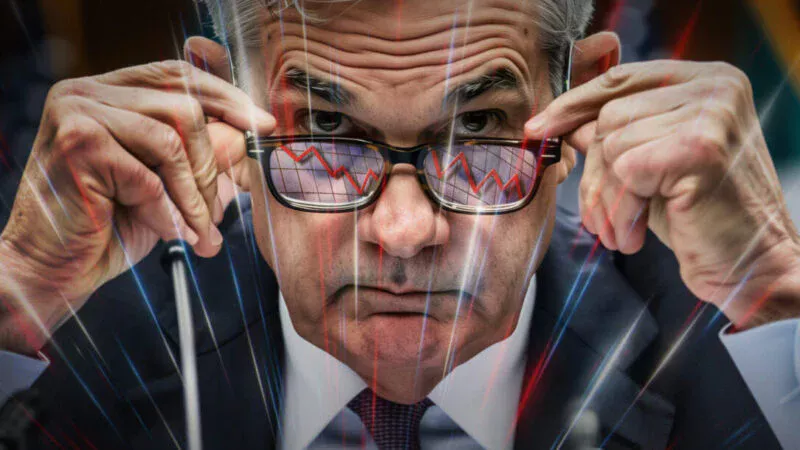
Powell Rejects Rate Hikes on Iran Oil Shock and Inflation Fears

Mar 31, 2026 | Macro 🇺🇸 United States | Polyminute News | No comments
Powell Rejects Rate Hikes on Iran Oil Shock and Inflation Fears

Federal Reserve Chair Jerome Powell stated Monday that inflation expectations remain well-anchored despite the Iran war-driven oil surge and Trump tariffs. He explicitly ruled out near-term rate hikes, reaffirmed the 3.5%-3.75% target as appropriate, and dismissed private-credit turmoil as non-systemic. Markets instantly repriced December hike odds from >50% to 2.2%, signaling the Fed’s dovish pivot on supply-side shocks.

Powell used his Harvard appearance to deliver a clear “look-through” doctrine on the oil shock: the Fed will ignore transitory energy-driven inflation and focus on its dual mandate. He cited stable market-based breakevens (5-year at ~2.56% and falling) and anchored longer-term expectations as evidence that no policy response is required. The current 3.5%-3.75% funds rate range is viewed as neutral and well-positioned.

owell explicitly noted that any rate hike would arrive too late to blunt the oil price impulse yet would tighten financial conditions precisely when the shock is fading—classic supply-shock logic he has applied before. He refused to engage on successor Kevin Warsh’s preference for lower rates or on his own post-May departure.

Separately, Powell addressed the $3 trillion private-credit sector’s rising defaults and outflows, calling it a “correction” with no visible banking-system linkages or contagion risk. The comments removed the last hawkish catalyst priced into markets, triggering an immediate repricing of rate expectations and easing financial conditions across asset classes.

01

First-Order Effects

Obvious, immediate impacts
  • Rate-hike odds collapse to 2.2% by December, driving immediate Treasury rally and 10-year yield compression.
  • USD sells off as “higher-for-longer” narrative is explicitly abandoned.
  • Risk assets (equities, credit spreads) tighten on lower-for-longer policy signal.
  • Oil and energy equities face short-term volatility but no Fed-induced demand destruction.
  • Private-credit outflows stabilize as systemic-risk premium evaporates.
02

Second-Order Effects

Cross-sector · cross-geography · time-lagged
  • Corporate and household borrowing costs fall further, extending the capex and M&A cycle in rate-sensitive sectors (tech, real estate, leveraged buyouts).
  • Emerging-market currencies and local debt strengthen as weaker USD and stable Fed policy reduce external financing pressure.
  • Tariff-driven price pressures are partially offset by easier financial conditions, muting the growth drag from Trump trade policy.
  • Investor behavior shifts toward duration and growth stocks, amplifying the existing rally in mega-cap and AI-exposed names.
  • Bank lending standards ease as private-credit stress is ring-fenced, supporting small-business and commercial-real-estate credit.
03

Alpha Layer — Opportunities

Trades · strategic positioning · business impacts
  • Precedent is cemented: the Fed will systematically ignore geopolitical supply shocks, embedding higher inflation tolerance even under a Trump administration—market is currently underpricing this regime shift.
  • Private-credit deleveraging accelerates without regulatory forbearance or Fed backstop, creating asymmetric buying opportunities in distressed direct-lending assets at 20-30% discounts by mid-2027.
  • Warsh’s stalled nomination and Powell’s silence reinforce market pricing of easier policy under the next chair, widening the gap between consensus hawkish positioning and actual Fed path.
  • Longer-term, repeated “look-through” episodes risk gradual un-anchoring of expectations if oil shocks persist; the highest-convexity trade is long inflation vol while short policy vol—cheap insurance against consensus “soft-landing forever” complacency.
  • Capital reallocates from private-credit shadow banking to public markets and bank balance sheets, structurally lowering systemic leverage but raising mispricing volatility in illiquid credit—prime hunting ground for macro hedge funds through 2027.

// Share Your Analysis