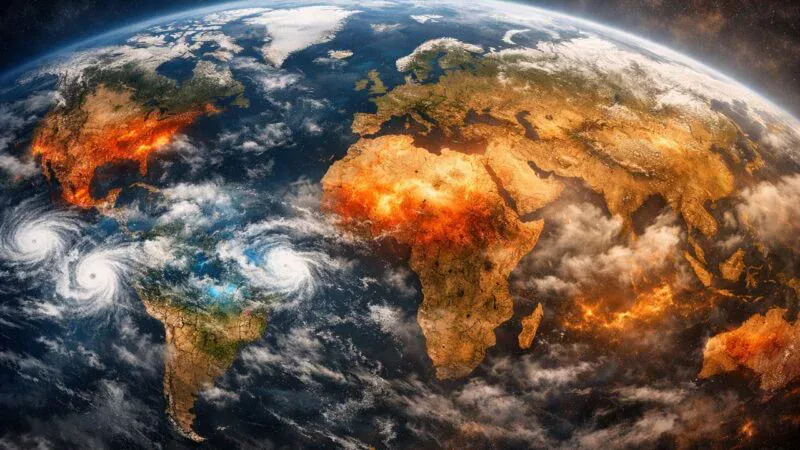
A potent El Niño is now the base-case tail risk for late 2026, with European models assigning higher probability than US forecasts. Sea-surface temperatures in the eastern Pacific are projected to exceed +2 °C anomaly — the informal threshold for “super” status. This follows a multi-year La Niña and arrives against an already stressed fertilizer complex: US-Israeli strikes on Iran since 28 February have virtually stopped fertilizer shipments through the Strait of Hormuz, which normally carries ~33 % of global seaborne trade.
The timing is toxic. US farmers are committing acreage and input purchases now; any sustained nitrogen price spike will feed directly into 2026/27 harvest costs. Paul Donovan (UBS) explicitly states drought and water constraints from El Niño will likely dominate nitrogen shortages as the bigger price driver. Chris Jaccarini (ECIU) frames the squeeze as dual-sided: climate extremes hitting yields while fossil-fuel dependence amplifies input costs.
Commodity-specific exposure is asymmetric: cocoa, palm oil, rice and sugar face direct El Niño headwinds via drought in West Africa, Southeast Asia and India. Broader tropicals (coffee, tea, bananas, soy-fed proteins) are also vulnerable. The UN World Food Programme warns that if the Iran war persists past June with oil above $100, the number of acutely food-insecure people could rise by another 45 million on top of the existing 318 million — levels last seen at the peak of the 2022 Ukraine shock.
Consensus is still treating the Iran war and El Niño as separate risks. Markets have priced fertilizer tightness but have not yet fully discounted the climate multiplier. Dawid Heyl (Ninety One) notes he is “a lot more concerned” about this episode than Russia-Ukraine because nitrogen availability is now the binding constraint. The temporary US-Iran ceasefire announced Wednesday offers no structural resolution; shipping insurance and risk premia will remain elevated for months.
// Share Your Analysis