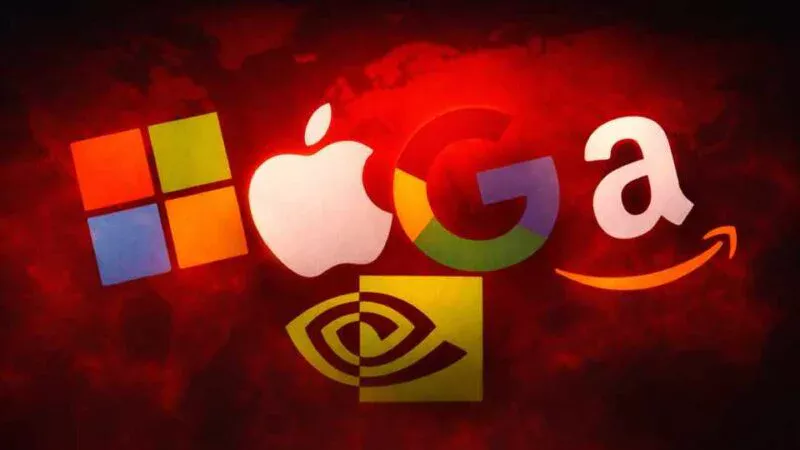
Iran’s IRGC Threatens Nvidia, Apple, Microsoft & US Tech Giants With Direct Attacks

Apr 1, 2026 | Geopolitics 🇮🇷 Iran | Polyminute News | No comments
Iran’s IRGC Threatens Nvidia, Apple, Microsoft & US Tech Giants With Direct Attacks

Iran’s Revolutionary Guard has listed 18 major US tech firms—including Nvidia, Apple, Microsoft, Google, Intel, Tesla and JPMorgan—as direct targets for destruction starting 8pm Tehran time on April 1, in retaliation for US-Israeli strikes. This follows March’s successful Iranian attack on AWS data centers in the UAE and marks the first time private tech infrastructure is explicitly designated a battlefield asset in the five-week-old conflict.

Iran’s Islamic Revolutionary Guard Corps (IRGC) escalated hybrid warfare on April 1 by publicly naming 18 US and Western tech companies as “legitimate targets” for physical or cyber destruction. The list includes every major AI/semiconductor player (Nvidia, Apple, Microsoft, Google, Intel, Cisco, HP, Oracle, IBM, Dell, Palantir) plus financial (JPMorgan), aerospace (Boeing, GE) and regional AI infrastructure partner G42.

The threat was issued via IRGC-affiliated Telegram at roughly 12:30pm EDT, giving employees a direct evacuation order and tying each future “assassination” to the destruction of an American company. This is not bluster: Iran already struck AWS data centers in the UAE in early March, causing regional cloud outages. US tech has poured billions into Middle East AI infrastructure precisely because of cheap power and land; those same assets are now framed as legitimate military targets.

Intel’s immediate statement confirmed active safeguarding of Middle East facilities. Risk firm Healix described the move as part of a sustained pattern, not an isolated incident: “Tech assets are now treated as part of the conflict.”

Context is critical: the US-Iran war is in its fifth week, with over 3,400 Iranian casualties, 13 US deaths, thousands of drones/missiles fired at Gulf states, and Trump signaling imminent US withdrawal in “two or three weeks.” Oil markets remain volatile, but the IRGC has now explicitly expanded the theater of war into the private technology sector that underpins global AI, cloud, and semiconductor supply chains.

01

First-Order Effects

Obvious, immediate impacts
  • Immediate risk premium spikes for all listed equities; Nvidia, Apple, Microsoft and Google face pre-market selling pressure on physical/cyber threat to ME operations.
  • Accelerated employee evacuations and facility lockdowns across UAE/Saudi data centers and offices.
  • Short-term cloud and AI workload disruptions possible if any listed hyperscaler or chipmaker suffers even limited physical damage.
  • Surge in cyber-insurance and kidnap/ransom premia for tech executives and critical infrastructure in the Gulf.
  • Trump administration forced to address corporate targeting in tonight’s national address, complicating de-escalation messaging.
02

Second-Order Effects

Cross-sector · cross-geography · time-lagged
  • Gulf states (UAE, Saudi, Bahrain) face immediate pressure to upgrade physical security around foreign tech campuses or risk losing future AI hyperscale investments.
  • Global AI training timelines lengthen as hyperscalers quietly reroute new GPU clusters away from low-cost ME sites.
  • Semiconductor and cloud supply-chain hedging accelerates: customers begin dual-sourcing and inventory builds for Nvidia/Intel silicon.
  • Cross-sector contagion to defense and financial names on the list (Palantir, JPMorgan, Boeing) as investors price in hybrid warfare spillovers.
  • Behavioral shift: tech boards treat Middle East exposure as a new geopolitical risk factor alongside Taiwan/China risk.
03

Alpha Layer — Opportunities

Trades · strategic positioning · business impacts
  • Redefines “critical infrastructure” globally: private AI data centers and chip fabs now sit on the same targeting matrix as oil terminals or military bases—consensus still prices this as temporary noise.
  • Long-term acceleration of onshoring/“friend-shoring” for AI infrastructure into US, Europe, and stable Gulf allies; ME’s cost advantage is permanently impaired.
  • Hybrid warfare doctrine normalization: state actors now treat commercial tech as an extension of enemy military capability, creating persistent low-intensity attrition risk that markets are materially underpricing.
  • Asymmetric opportunity: pure-play US/European data-center REITs, domestic semiconductor foundries, and alternative energy providers (nuclear/SMRs) gain structural tailwinds while ME-exposed tech trades at an unacknowledged risk discount.
  • Narrative fracture: the “AI supercycle is unstoppable” consensus collides with the reality that the physical substrate of that cycle is now contestable by mid-tier powers—most investors still treat the threat as geopolitical theater rather than a permanent repricing of tech beta.

// Share Your Analysis