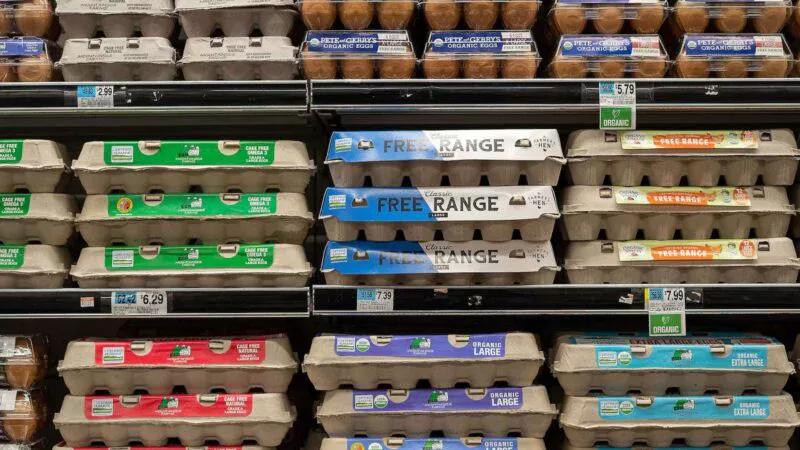
The U.S. egg market has undergone a sharp reversal. From avian influenza-driven shortages and record prices in 2025 to significant oversupply in mid-2026. Flock rebuilding, improved productivity, and small farm expansion have outpaced steady but not explosive demand growth.
Bureau of Labor Statistics data shows egg prices fell 44.7% year-over-year in March 2026. Wholesale and retail prices have continued declining, with some premium dozens selling below $1. Industry leaders from Pete & Gerry’s, Cal-Maine Foods (largest U.S. distributor), and the American Egg Board confirm the weakness is purely supply-driven, not demand-related. Consumer surveys show sustained or increasing focus on eggs as a high-protein, whole-food staple.
However, this “relief” for consumers masks acute pain for producers. Feed remains roughly half the cost of production and elevated since 2022-2023 spikes. Fuel costs have risen sharply due to the ongoing war in Iran, directly hitting transportation. Labor costs also continue climbing. The result is severe margin erosion even as volumes move.
This creates a classic commodity trap: prices clearing at marginal cost or below for many producers, while fixed and variable input inflation refuses to abate. Large integrated players like Cal-Maine may weather this better through scale and hedging, but smaller and mid-tier producers (including those that expanded aggressively post-flu) face real risk of losses or forced consolidation.
Politically, President Trump is claiming credit for lower prices as a midterm election narrative of improved affordability, which may sustain short-term consumer support but does little to address the underlying producer distress.
// Share Your Analysis