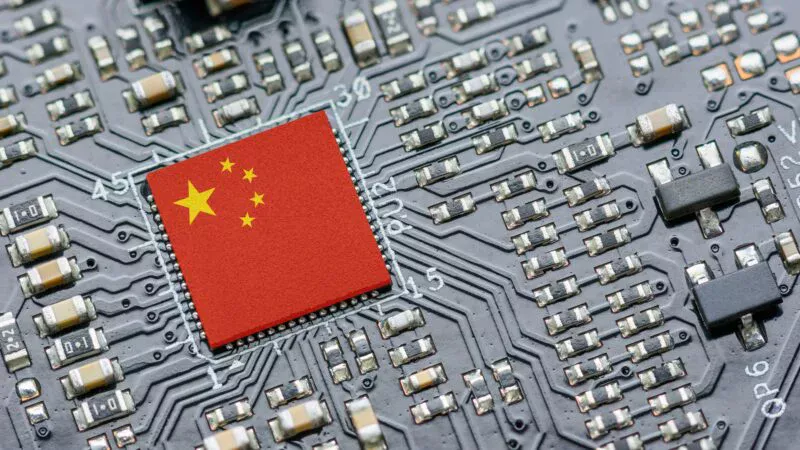
Chinese chipmakers delivered record 2025 revenues across logic, foundry and memory segments, powered by three mutually reinforcing drivers: surging domestic AI infrastructure demand, global memory shortages that spiked HBM pricing, and US export controls that turned import substitution into “rocket fuel” for the entire sector (Albright Stonebridge’s Paul Triolo).
MIC posted $9.3B revenue (+16% YoY) and guided >$11B for 2026. Hua Hong delivered record Q4 sales with flat-to-up guidance. Moore Threads, the domestic GPU hopeful targeting Nvidia’s China market, forecast 231-247% YoY growth. CXMT, China’s leading memory player, saw revenue explode 130% to approximately $8B, capturing share in restricted high-bandwidth memory after HBM exports were cut off.
The mechanism is straightforward yet under-appreciated: US curbs on advanced Nvidia GPUs and HBM created a domestic “compute gap” that Huawei, Baidu and other hyperscalers are filling with locally sourced alternatives—even when performance lags. “Good enough” domestic silicon is now the default procurement choice inside China. Memory shortages provided additional tailwinds, allowing CXMT to monetize even HBM2/HBM2e generations that leading Korean and US players abandoned years ago.
Critically, the memory ramp is not isolated. Triolo notes that every new memory fab in China now functions as an unintended incubator for advanced process technology post-2022 US controls—skills that will migrate to logic and GPU nodes. Yet structural ceilings remain: SMIC and Hua Hong still cannot scale leading-edge nodes without EUV lithography denied by Dutch export rules. Overcapacity risk in mature nodes is real if domestic demand does not keep pace with new supply.
Net result: US policy designed to slow China has instead turbocharged revenue momentum and accelerated supply-chain decoupling in a protected home market of unprecedented scale. Consensus that sanctions would cripple China’s AI ambitions is being disproven in real time by the P&L.
// Share Your Analysis