AI Social Offloading Crisis: Emotional Intelligence Deficit

Apr 15, 2026 | Health | Polyminute News | No comments
AI Social Offloading Crisis: Emotional Intelligence Deficit

Yale students using ChatGPT to draft rejection texts signal a structural shift: 1/3 of teens now prefer AI for serious conversations. Post-pandemic isolation meets AI accessibility, stunting emotional growth and outsourcing human connection—with direct implications for AI revenue, workforce readiness, consumer spending, and long-term GDP.

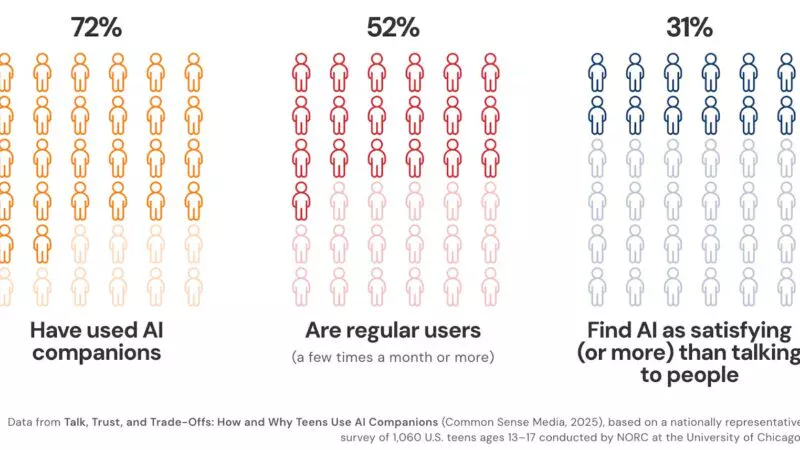
A documented behavioral pivot is underway: Gen Z is systematically outsourcing emotionally complex interactions—rejection texts, mixed-signal decoding, breakup scripts—to large language models. The Yale example is not anecdotal; Common Sense Media’s 2025 survey shows one-third of teens already favor AI companions over humans for serious talks. Researchers term this “social offloading.”

The mechanism is clear. Pandemic lockdowns hit Gen Z during the critical 10–19 window for frontal-lobe development, social cue calibration, and mentalization. Digital-native habits plus AI’s frictionless availability created a perfect storm. Users feed ChatGPT context and emotions; the model returns polished, ambiguity-averse prose. Recipients detect the artifice (AI detectors flagged Patrick’s text at 99 %), yet the sender gains perceived clarity and reduced anxiety.

Two immediate problems emerge. First, “expectation mismatch”: receivers interact with an AI-optimized persona, not the actual human. Second, repeated offloading erodes the sender’s own communicative confidence, identity formation, and tolerance for relational friction. Psychiatrists at Tufts and behavioral scientists at Kansas State warn this deepens the existing loneliness epidemic, creating a self-reinforcing “loneliness loop.” In extreme cases, suicidal ideation is now routed through chatbots instead of authentic human support networks.

The economic signal is unambiguous. A generation representing the largest upcoming cohort of consumers, workers, and voters is substituting high-value human relational capital for zero-marginal-cost AI output. Short-term: explosive consumer AI engagement. Long-term: measurable deficits in emotional intelligence (EQ) that correlate with lower leadership attainment, higher job turnover, reduced marriage and fertility rates, and elevated lifetime mental-health costs. Markets are currently pricing the AI usage upside while heavily discounting the human-capital depreciation on the other side of the ledger.

01

First-Order Effects

Obvious, immediate impacts
  • Consumer AI query volume spikes as Gen Z normalizes ChatGPT for daily interpersonal labor, directly lifting monetization for OpenAI, Anthropic, and Google Gemini.
  • Dating-app and social-platform engagement metrics decouple from genuine interaction, inflating DAU while masking declining user satisfaction.
  • Immediate surge in AI-detection tools and “humanizer” prompt marketplaces as users and recipients race to authenticate tone.
  • Corporate HR begins screening for AI-assisted interview and client communication, creating early compliance and training spend.
02

Second-Order Effects

Cross-sector · cross-geography · time-lagged
  • Entry-level white-collar productivity gap widens: Gen Z hires require 18–24 months extra coaching in negotiation, feedback delivery, and conflict resolution, raising corporate opex across tech, finance, and services.
  • Mental-health-tech TAM expands as loneliness loop drives demand for hybrid AI + human therapy platforms; insurers face higher claims from delayed relational repair.
  • Fertility and household-formation rates decelerate further, amplifying Japan-style demographic drag on US consumption and housing markets by 2035.
  • Education sector pivots: elite universities quietly add “human negotiation labs” while mid-tier schools see soft-skills remediation costs rise, shifting ed-tech capex priorities.
03

Alpha Layer — Opportunities

Trades · strategic positioning · business impacts
  • US human-capital depreciation becomes a quiet geopolitical liability versus cultures (e.g., parts of East Asia) that still enforce high-friction, face-to-face socialization—markets underprice America’s relative EQ erosion in innovation clusters.
  • Premium “authenticity economy” emerges: brands, experiences, and employers that signal zero-AI human interaction command pricing power; early signals already visible in luxury dating and executive coaching.
  • AI vendors face valuation compression risk once regulators or institutional investors quantify the societal externality—consensus currently prices only the usage flywheel, not the downstream productivity tax.
  • Asymmetric long alpha: invest in platforms that use AI to teach rather than replace emotional intelligence (real-time coaching overlays, VR empathy training); the market has not yet priced the rebound demand for tools that restore, rather than offshore, relational competence.

// Share Your Analysis