Hyperscalers’ $700B AI Capex Bet Turns Binary: Can Big Tech Monetize Before 2030?

Apr 17, 2026 | Tech | Polyminute News | No comments
Hyperscalers’ $700B AI Capex Bet Turns Binary: Can Big Tech Monetize Before 2030?

Hyperscalers (AMZN, MSFT, META, GOOGL) have committed up to $700B in AI infrastructure spend for 2026—a 60% YoY surge—consuming nearly 100% of operating cash flow. Investor jitters triggered a $1T+ Big Tech wipeout last week as the “side bet” on AI became an existential wager on monetization timelines and debt-funded capex.

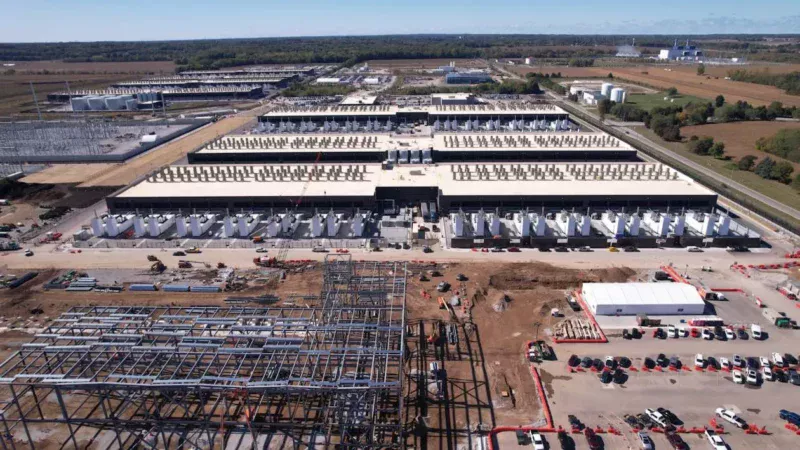
Hyperscalers are accelerating AI data-center buildout at unprecedented scale: $700B committed capex this year, exceeding the GDP of the UAE, Singapore, or Israel. This represents a 60% aggregate increase from 2025 and shifts capex from ~40% of cash flow (10-year average) to nearly 100%, according to UBS. The result is immediate pressure on free cash flow and balance sheets, prompting debt raises—Oracle eyeing $45-50B and Alphabet $20B in new bonds.

Markets reacted violently: >$1T in market-cap evaporation last week on fears that returns may not materialize before asset obsolescence (data centers and chips have 3-5 year useful lives). Partial recovery this week has not erased the uncertainty. The bet is now binary: either explosive AI demand and pricing power deliver outsized monetization, or hyperscalers face structurally impaired profitability and equity dilution.

Bullish analysts (e.g., Gil Luria, D.A. Davidson) counter that major builders are already pre-selling capacity, generating positive returns pre-build. Yet Morningstar’s Michael Field warns investors now view the entire business model at risk, not a peripheral experiment. Payback timelines remain “very much unknown,” requiring credible monetization strategies by 2030 to avoid further capex pushback and stock volatility. The core tension is not the size of spend but its funding source and the compressed ROI window—turning AI infrastructure from growth catalyst into potential cash-flow trap.

01

First-Order Effects

Obvious, immediate impacts
  • Hyperscaler equities experience acute volatility spikes, with $1T+ market-cap losses followed by fragile rebounds as ROI skepticism overrides AI narrative momentum.
  • Corporate debt issuance surges (Oracle $45-50B, Alphabet $20B planned) to fund capex without fully eroding equity holdings.
  • Free-cash-flow conversion collapses as capex absorbs ~100% of operating cash (vs 40% historical), compressing dividends, buybacks, and net cash positions.
  • Investor sentiment flips from unconditional AI enthusiasm to explicit payback scrutiny, raising cost of equity for further spending announcements.
02

Second-Order Effects

Cross-sector · cross-geography · time-lagged
  • Power and land scarcity in data-center hotspots (e.g., Indiana, Virginia) drives localized energy-price spikes and delays for non-hyperscaler tenants.
  • Semiconductor supply chain faces demand-pull inflation as hyperscalers lock capacity years ahead, squeezing smaller AI players and sovereign chip initiatives.
  • Cross-border capital reallocation accelerates: European and Asian corporates accelerate private-cloud or sovereign-AI alternatives to avoid US hyperscaler dependency.
  • Tech-sector hiring and M&A slow outside core AI infrastructure, as cash preservation trumps growth experiments.
03

Alpha Layer — Opportunities

Trades · strategic positioning · business impacts
  • AI infrastructure becomes a pure balance-sheet risk asset class; consensus “AI supercycle” pricing ignores the binary 3-5 year payback cliff, creating asymmetric short opportunities in over-levered names if monetization slips.
  • Hyperscaler dominance forces nation-state digital sovereignty policies (already visible in Europe), opening structural alpha in non-US data-center REITs, edge-compute, and localized AI stacks.
  • Pre-selling model embeds forward revenue visibility but caps pricing power long-term; market underprices the shift to usage-based economics, favoring specialized AI software vendors over pure infrastructure plays.
  • Energy markets face permanent demand shock from 24/7 data centers; nuclear and next-gen renewables become the clearest underpriced AI-adjacent trade as hyperscalers quietly pivot to power offtakes.
  • If returns disappoint, Big Tech’s “winner-take-most” narrative fractures, unlocking multi-year rotation into private AI infrastructure funds and open-source alternatives that consensus currently dismisses as irrelevant.

// Share Your Analysis