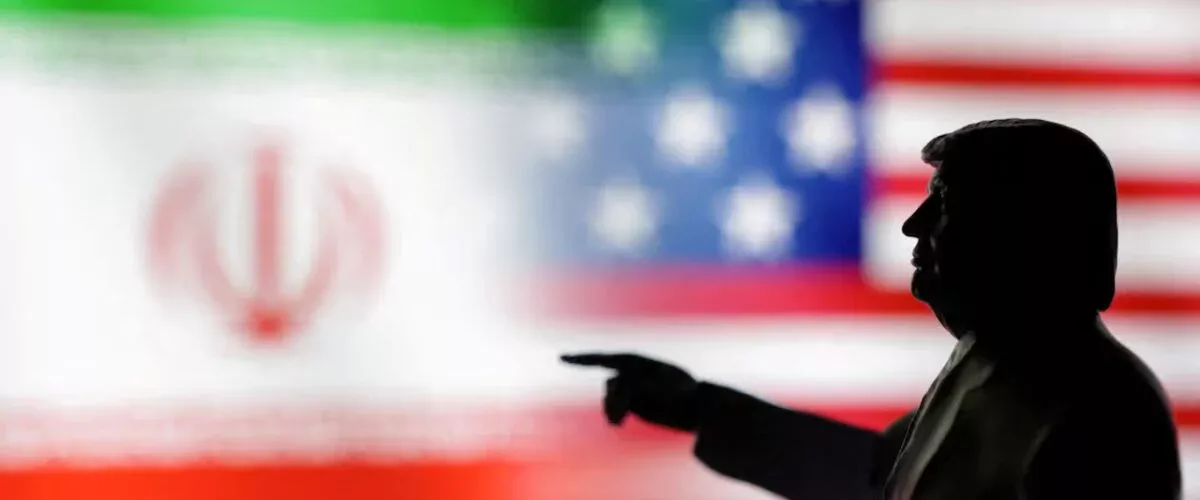
The dominant market narrative — that the conflict is effectively resolved and risk assets should be positioned for the peace dividend — is directionally plausible but empirically premature. The gap between that narrative and the actual state of negotiations is itself one of the more exploitable signals available to sophisticated investors right now.
The United States and Israel launched a large-scale air war against Iran on February 28, 2026, killing Supreme Leader Khamenei and destroying a significant number of military and government targets. Iran retaliated by closing the Strait of Hormuz — disrupting roughly a fifth of global oil consumption, the single largest energy market shock in modern history. On April 7, both sides agreed to a two-week ceasefire mediated by Pakistan. That ceasefire expires April 21. No extension has been confirmed.
Iran’s foreign ministry has declined to confirm whether the ceasefire will be extended, insisting the US must demonstrate genuine seriousness and characterizing some American demands as “unreasonable and unrealistic.” Tehran’s position remains anchored on its original 10-point proposal with no new concessions offered. The core sticking points are a proposed suspension of Iranian uranium enrichment — both sides nominally agree on the concept but cannot settle on a timeframe — along with the dismantling of major enrichment facilities and the immediate reopening of Hormuz without tolls.
Markets, meanwhile, are priced for resolution. Bitcoin trades near $75,500, the total crypto market cap has climbed to $2.56 trillion, and equity markets have risen on signs of diplomatic progress. Even with Brent crude near $94 per barrel, integrated energy majors trade at free cash flow yields of 8–12%, well above market averages. Optimism is priced in. Breakdown is not — which creates asymmetric risk in both directions around the April 21 deadline.
The Negotiation as a Strategic Game
Both parties entered the Pakistan talks with maximalist positions, which is textbook anchoring: by opening with extreme demands, each side pulls the eventual settlement point toward its preferred outcome and makes its actual asks appear moderate by comparison. Iran’s reported demand for Hormuz transit tolls of up to $2 million per vessel was never a genuine negotiating position — it was a device to make the real ask (retaining some form of operational influence over the strait) look reasonable. The US demand for complete and immediate dismantlement of all enrichment infrastructure followed the same logic.
After the first round, Iranian delegates could not agree on any of the core US red lines: terminating enrichment, dismantling major facilities, allowing retrieval of highly enriched uranium, accepting a broader regional peace framework, ending support for Hamas, Hezbollah, and the Houthis, and fully opening Hormuz without tolls. That is not a negotiation making incremental progress — it is one that has not yet engaged in earnest on any of the critical items. The first round’s failure was structurally predictable. The second round, expected to be led by Vice President Vance, will be the more meaningful signal.
There is also a structural constraint that markets consistently underprice in post-conflict negotiations: the absence of a single authoritative decision-maker on the Iranian side. The new post-Khamenei political configuration is genuinely fragmented. Whoever sits across from Vance in Islamabad may lack the domestic political standing to make the concessions required and enforce them internally — even if they personally wanted to. Commitment credibility is as important as the terms themselves, and it is far harder to verify.
The Real Incentive Structures
What the United States Actually Needs
The US’s stated red lines are well understood publicly. Its actual incentive structure is more commercially and politically specific.
The Trump administration faces midterm elections in November 2026 with inflation running above target and gasoline averaging $3.84 nationally. Goldman Sachs has modeled a scenario where sustained Hormuz closure pushes oil above $100 per barrel, taking US gasoline to $3.50 nationally — making inflation a permanent electoral problem. The political arithmetic is unambiguous: a deal before summer is not merely diplomatically desirable, it is electorally necessary.
Beyond the electoral motive, the reconstruction opportunity is strategically significant. The IEA estimates at least 40 energy assets across nine countries were severely damaged in the conflict, with the agency’s head describing the crisis as worse than the combined impact of the 1970s oil shocks and the Russia-Ukraine gas disruption. International energy majors — ExxonMobil, TotalEnergies, Shell — are already positioned as probable leaders in the energy sector rebuild.
The China dimension is arguably the most structurally important element and the least discussed in mainstream coverage. Iran had been supplying oil to Asia under sanctions workarounds, with roughly 20 million barrels per day flowing through Hormuz, most destined for Asian markets. Bringing that supply formally under US-allied infrastructure — extracted and processed by US-adjacent companies, priced in dollar terms, routed through US-protected maritime lanes — represents a permanent redirection of energy flows away from China’s informal supply network. This is not incidental to the war’s strategic logic; it may be central to it.
What Iran Actually Needs
Iran’s post-war governing class faces a legitimacy crisis that is almost entirely internal and almost entirely ignored in Western market analysis. Iranian authorities executed at least 1,639 people in 2025 — the highest number since 1989 — indicating a regime under severe domestic pressure even before the February strikes. The political configuration emerging from Khamenei’s assassination will be desperate for economic recovery, which requires sanctions relief, foreign capital, and a functioning Hormuz. Every additional day of closed straits imposes costs Iran can no longer absorb.
The face-saving calculus is deeper than it appears. Iran cannot be seen to accept a deal that reads as unconditional surrender — not because of diplomatic vanity, but because any post-war government that signs such a deal will likely be politically unsustainable domestically, meaning the deal itself becomes unenforceable. The construction of a narrative in which Iran “negotiated” rather than capitulated is a prerequisite for any settlement that actually holds.
The Macroeconomic Picture: The Fed’s Impossible Position
The thesis circulating in some market commentary — that the Fed will cut rates aggressively in response to the oil shock, drawing on COVID-era precedent — is the analysis most in need of challenge.
Federal Reserve minutes from the March meeting show that front-month crude futures rose roughly 50% over the intermeeting period, while options markets now assign approximately a 30% probability to a rate hike through early next year — compared with a base case of one cut previously. The Fed’s official projection remains one cut in 2026, with policymakers explicitly signaling they do not intend to repeat the 2021 mistake of dismissing inflation as transitory before it became entrenched.
The COVID analogy is instructive precisely because it breaks down where it matters most. In 2020, the supply shock arrived simultaneously with a demand collapse — households stopped spending, businesses shuttered, and the deflationary pressure from cratering demand gave the Fed the room to print aggressively without igniting durable inflation. The current situation is a pure supply shock hitting an economy with no equivalent demand offset. The IMF projects US inflation at 3.2% for 2026 — up 0.6 percentage points from prior estimates — alongside weak jobs growth and a shrinking labor force, a combination that structurally resembles stagflation more than a clean recession the Fed can ease its way through.
Europe faces a grimmer picture still. The ECB has postponed planned rate cuts, UK inflation is forecast to potentially breach 5%, and chemical and steel manufacturers have already imposed surcharges of up to 30% to offset surging energy costs — with economists warning of permanent deindustrialization in some sectors if the maritime blockade persists through the summer refill season.
CME FedWatch as of April 14 prices two quarter-point rate cuts — in October and December 2026. That market consensus is meaningfully more optimistic than the Fed’s own dot plot. It is a consensus built on the assumption that Hormuz reopens and oil falls materially before autumn. Any ceasefire breakdown that re-closes the strait would force a painful repricing of that assumption across equities, real estate, and risk assets globally.
Second and Third-Order Market Consequences
Oil: The Reconstruction Premium and the Glut Thesis
A sharp oil price decline post-deal is the correct directional call but likely too aggressive in magnitude and timeline. Iranian oil infrastructure sustained significant physical damage. Israeli strikes hit four units of Iran’s South Pars gas field, while regional damage extends across ports, power grids, and desalination infrastructure — with the full scale of reconstruction measured in tens of billions of dollars and years of work. Restoring production capacity to pre-war levels will not happen in months regardless of when a deal is signed.
The more important structural shift is what the conflict has done to the US-Saudi relationship. The Hormuz closure has fundamentally disrupted the decades-old “oil for security” compact that underpinned stable Gulf energy flows since 1945. The US demonstrated willingness to destabilize the very infrastructure it previously guaranteed, and the stability that underpinned that arrangement has now vanished along with the world’s access to meaningful spare production capacity. Saudi Arabia and the Gulf states may re-evaluate strategic positioning in ways that outlast any Iran deal — potentially tightening OPEC+ discipline as insurance against future shocks rather than loosening it to reward US political needs.
The Reconstruction Trade: Who Captures the Upside
The reconstruction investment thesis is real but commercially specific, and the distinction matters. Engineering multinationals will likely be the first called in for assessment and planning, while ExxonMobil, TotalEnergies, and Shell are positioned as probable leaders in energy extraction and processing reconstruction. The trade is not a broad “buy post-war Iran” macro bet — it is a highly specific exposure to contractors and integrated energy majors that requires both deal completion and a workable legal framework for foreign investment in a post-Islamic-Republic state. That legal framework does not yet exist.
There is also a darker dimension worth flagging. A Financial Times investigation found $580 million in bets placed on falling oil prices just 15 minutes before Trump’s March 23 statement about postponing strikes for talks — prompting calls for formal investigation into potential insider trading. The pattern of politically-connected capital appearing consistently ahead of major announcements is not market noise; it is a signal that informational advantages in this conflict are being systematically monetized by actors operating outside normal market access. Retail and institutional investors alike should factor in that they are playing an information game with a stacked deck.
Bitcoin and Crypto: A More Nuanced Thesis
Bitcoin has risen roughly 7% since the conflict escalated on February 28, outperforming equities, gold, and silver — a performance that reflects something more interesting than simple risk-on sentiment. It has held near $70,000 even as Brent crude pushed toward $100, demonstrating that the asset is not trading as an oil-correlated risk asset. What is emerging is a more specific thesis: Bitcoin as a censorship-resistant, jurisdiction-neutral store of value in a world where dollar-denominated financial infrastructure is being actively weaponized through sanctions, blockades, and asset freezes. The Iran conflict has given every non-Western sovereign and institution a live demonstration of why they should care about alternatives to the dollar settlement system.
The regulatory catalyst is distinct from the geopolitical one and potentially more durable. The CLARITY Act passed the House 294–134 and is now stalled in the Senate over stablecoin yield provisions, but JPMorgan analysts have described its potential passage as a “positive catalyst” capable of triggering an institutional inflow cycle broader in scope than the ETF approvals of January 2024. Bitcoin’s surge past $72,500 on the April 8 ceasefire announcement demonstrated the asset’s sensitivity to geopolitical de-escalation even absent legislative progress.
The key analytical point is that the most bullish Bitcoin scenario requires simultaneous convergence of three independent catalysts: deal completion, CLARITY Act passage, and meaningful Fed easing. Each is plausible individually. All three arriving in a compressed timeframe is a lower-probability outcome than current positioning implies.
What Sophisticated Investors Should Monitor
The signals that matter most over the next 30 days are narrow and specific.
The April 21 ceasefire expiry is the single most important near-term binary. Oil fell and stocks rose earlier this week as markets priced in deal optimism, but the ceasefire has no confirmed extension and US negotiators have not formally committed to its continuation. A failure to extend without a substantive deal announcement would be a significant negative surprise to a market that has not priced the breakdown scenario.
Vance is expected to lead a potential second round of talks in Pakistan, with Trump suggesting they could resume within days. The Vice President’s direct involvement is a moderately bullish signal — the administration would not risk his direct participation in talks likely to fail publicly. But the distance between the parties on enrichment timelines and facility dismantlement remains wide enough that a second breakdown cannot be dismissed.
The Fed’s April 28–29 meeting will be the first at which policymakers can incorporate inflation data actually shaped by the war. The committee’s guidance on that occasion — and in particular whether it signals any shift from its current one-cut projection — will be the decisive monetary policy signal for the remainder of 2026.
The Structural View: What This Conflict Changes Permanently
Regardless of how the current negotiations resolve, three structural shifts appear durable and underpriced.
The US-Gulf security compact has been permanently altered. America demonstrated willingness to destabilize the very oil infrastructure it previously guaranteed, straining relationships with Riyadh and Abu Dhabi in ways that will take years to repair and may gradually redirect Gulf sovereign wealth allocation away from US Treasuries at the margin.
The de-dollarization thesis has received unexpected empirical support. Hormuz’s closure demonstrated to every energy-importing nation — particularly across Asia — the systemic risk of dependence on US-protected maritime chokepoints. Accelerated investment in alternative settlement systems, physical pipeline infrastructure bypassing the Gulf, and strategic reserve buildup will be a multi-year capital allocation consequence.
The Iran reconstruction opportunity represents a genuinely new frontier for US and Western capital in a region previously sealed. Whether that frontier generates alpha or becomes a graveyard for optimistic early capital — as similar post-conflict investment theses have repeatedly done from Iraq to Libya — will depend on legal frameworks, governance stability, and political continuity in Tehran that do not yet exist and cannot be assumed.
The market may be correct that this war is effectively over. The peace, however, is not yet written. And the difference between a clean deal in four weeks and a grinding six-month stalemate is worth considerably more than current asset prices suggest.



// Leave a Response