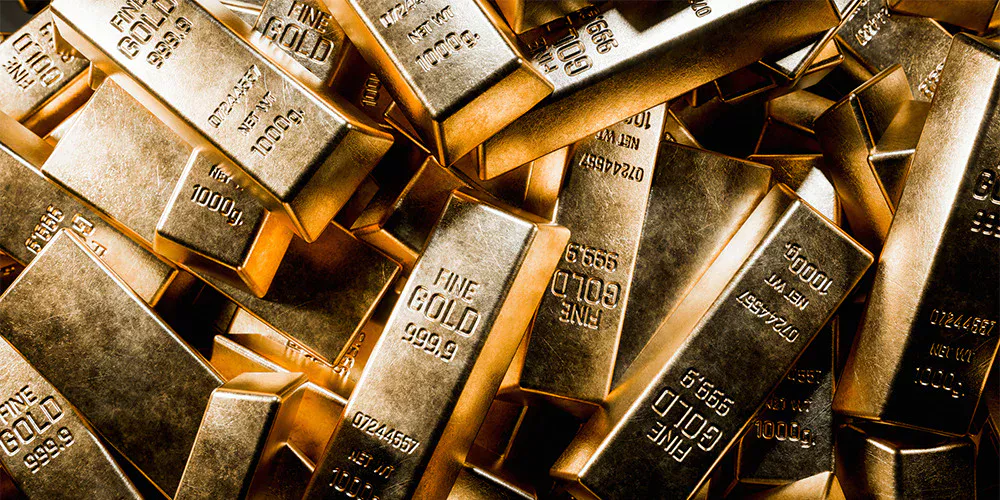
Central banks as a group set a new monthly record for gold sales in March, with net outflows reaching a 21st-century record of 102 tonnes — worth approximately $16 billion at the period’s average prices. Yet the real story is not uniform selling. It is a bifurcation: distressed sellers on one side, patient strategic accumulators on the other. Understanding who is doing what, and why, unlocks a far richer picture.
The US-Israeli military campaign against Iran has functioned as a classical terms-of-trade shock for oil-importing economies. The European Central Bank postponed planned interest rate reductions, raising its 2026 inflation forecast and cutting GDP growth projections, with economists warning that energy-intensive economies face high risks of technical recession if the maritime blockade persists through the summer. Oil hit $112 a barrel, California gasoline prices surpassed $5 per gallon, and Goldman Sachs raised its recession probability for the US to 30% over the next 12 months.
The macroeconomic mechanism is textbook but brutal. Higher oil means higher import bills, widening current account deficits, currency depreciation pressure, and — critically — a reinflation impulse that constrains the monetary policy response. When inflation looks stubborn, central banks are more likely to keep interest rates higher for longer, or at least delay cutting them. Higher rates make Treasury bonds and cash more appealing relative to a metal that pays no income. The result: gold, the traditional crisis hedge, is caught in a crossfire between safe-haven demand and rising real yields. As one analyst put it, “The irony is stark: gold is being sold during an active Middle East conflict precisely because the oil shock from that conflict is reigniting inflation and forcing the Fed to stay hawkish.”
The Key Actors and Their Divergent Incentives
Turkey: The Canary in the Coal Mine
Turkey’s behavior is the most instructive case study. The Central Bank of the Republic of Turkey, the world’s 10th largest national gold holder when the Iran War broke out at the end of February, sold and borrowed against approximately 15% of its total bullion reserves amid the ensuing oil-price shock and rebound in the US dollar. Turkey is a large oil importer that heavily manages its exchange rate, which forces the central bank to prop up the lira when an oil price spike exerts depreciation pressure — precisely the dynamic now playing out.
The lessons here are sobering. Countries that accumulated gold as a geopolitical hedge but carry structurally weak external accounts are discovering that the hedge works — it provides liquidity when needed — but consuming it is irreversible. Turkey spent years accumulating gold as a buffer against dollar dependency, and now that buffer is being drawn down to defend the very currency it was meant to protect. This is not policy failure; it is the reserve asset functioning as intended. But it illustrates how quickly a decade of accumulation can erode under simultaneous oil, dollar, and geopolitical stress.
Russia and Ghana: Sanctions and Structural Weakness
Russia’s selling reflects a different dynamic entirely — budget financing under sanctions, not currency defense. Ghana’s sales signal classic EM distress: insufficient hard currency liquidity to manage import bills and debt service. These are tactical, not strategic, reversals.
Poland: The Defense Dilemma
Poland represents perhaps the most politically significant case. The central bank governor briefly explored selling part of its gold reserves to fund defense spending — notable given that Poland was the largest central bank buyer of gold in both 2024 and 2025. A NATO frontline state weighing whether to liquidate its financial buffer to fund its military buffer encapsulates the impossible trade-offs now confronting European security policy. If others follow suit, it signals that the European defense build-up is consuming sovereign balance sheets, not just fiscal budgets.
China: The Strategic Opportunist
While distressed sellers dominate headlines, China is quietly doing the opposite. China has consistently acted as a dip buyer, purchasing more gold in March than in years, continuing a decade-long de-dollarization trend. The PBoC continued reporting purchases, pushing its holdings to 2,308 tonnes with gold comprising 9.6% of total reserve assets — and this is almost certainly an undercount. Some analysts believe China is buying 200–300 tonnes annually through off-balance-sheet channels including commercial banks and state enterprises, meaning the true global central bank demand figure could be 300–400 tonnes higher than officially reported.
China’s behavior reveals the defining strategic asymmetry of this episode. While EM oil importers are compelled to sell gold to survive, China — an oil importer but one with $3+ trillion in FX reserves and a structurally managed exchange rate — can absorb the oil shock, stay solvent, and buy the dip from distressed sellers. It is effectively recycling the crisis into strategic reserve accumulation at a discount. This is geopolitical arbitrage executed at central bank scale.
The Non-Obvious Implications
The Gold Market Is Undergoing a Covert Ownership Transfer
The March selloff represented a 21st-century record in net official sector outflows by weight. Yet this gold is not disappearing — it is being absorbed by strong-hand buyers: China, domestic retail investors in Asia, and opportunistic funds. JPMorgan has a year-end price target of $6,300 per ounce, and Deutsche Bank stands at $6,000. The implication is that the current correction is redistributing gold from distressed EM central banks to patient accumulators — a transfer that structurally strengthens the case for higher long-term prices while temporarily suppressing them.
ETF Outflows: The Crowded-Trade Unwind
Compounding official sector selling is retail and institutional capitulation. Major gold ETFs, including SPDR Gold Shares (GLD), have seen billions of dollars leave in a short period. This matters because gold had staged an extraordinary pre-war rally, and crowded trades unwind sharply when the narrative that justified them shifts. Investors who bought gold as a war hedge are discovering that this particular war is inflationary in a way that punishes gold in the near term. The same crisis that validated the original thesis is — perversely — undermining the trade. This behavioral dynamic is temporary but can extend losses well beyond what fundamentals alone would justify.
The Real Yield Trap
The gold market’s most underappreciated driver right now is the real yield dynamic. Gold often tracks real yields — interest rates after adjusting for inflation — more closely than inflation headlines alone. If markets believe inflation will force central banks to stay tough on rates, real yields can rise, and that tends to push gold prices down. The Iran shock has created a situation where inflation expectations are rising faster than central banks can credibly cut, keeping real yields elevated. This is the mechanical headwind. However, it is also inherently fragile: if the conflict de-escalates, oil prices fall, and the Fed pivots, real yields could drop sharply, and gold would likely recover with equal velocity. Gold prices hit a near three-week high on April 8th after President Trump announced a two-week ceasefire with Iran — a preview of how quickly the dynamic can reverse.
Silver: The Overlooked Casualty
The silver market saw a sell-off twice as severe as gold’s due to geopolitical conflict and high oil prices. With China producing 60% of refined silver and potentially restricting exports, supply risk is a major concern. Silver’s dual role as a precious metal and an industrial input makes it doubly exposed: safe-haven liquidation and industrial demand contraction from a slowing global economy hit simultaneously.
Second and Third-Order Consequences
Who Benefits:
- China, which is methodically increasing its gold share of reserves at discounted prices, accelerating the de-dollarization trajectory.
- Gold miners in politically stable jurisdictions (Australia, Canada, West Africa) who benefit from price support above their all-in costs despite the correction.
- US Treasury markets, which are receiving capital rotation from liquidated gold positions, temporarily reducing Washington’s borrowing cost even as its deficit widens.
- Commodity-exporting Gulf states, which accumulate dollar surpluses from high oil prices and may quietly recycle them into gold when prices stabilize.
Who Loses:
- EM oil importers with managed exchange rates — Turkey, Pakistan, Egypt — facing simultaneous pressures on FX reserves, inflation, and debt servicing costs.
- Western retail gold investors who entered late in the rally and are experiencing mark-to-market losses precisely when they believed the crisis thesis was playing out.
- European defense budgets, squeezed between energy costs and security spending, with no gold windfall to draw upon (most European central banks have not rebuilt reserves since the pre-2010 era of selling).
Challenging the Mainstream Narrative
The mainstream story frames this as central banks “abandoning gold.” The evidence does not support that conclusion. What is happening is more nuanced: a subset of financially stressed central banks is drawing on their most liquid reserve asset to manage acute external pressures — exactly what the asset is supposed to do in a crisis. Meanwhile, the world’s largest accumulator is using the opportunity to deepen its position.
More importantly, the structural drivers of the multi-year gold bull market remain intact: de-dollarization momentum, elevated geopolitical fragmentation, negative real yield regimes in the medium run, and the fundamental underallocation of gold in most EM reserve portfolios relative to the global average. Gold still comprises only around 4% of China’s massive foreign exchange reserves, significantly below the global central bank average of 15–20% — suggesting years of structural buying remain ahead simply to reach parity with peers.
The near-term paradox — gold weakening during a geopolitical crisis — is real but historical precedent suggests it is temporary. In 1990, gold initially fell when Iraq invaded Kuwait, then surged. In 2022, gold dipped sharply in the weeks after Russia invaded Ukraine before recovering all losses. Crises that generate oil shocks and inflation initially produce real yield headwinds for gold, but those headwinds dissipate as growth slows and monetary policy eventually pivots.
What Sophisticated Investors Should Monitor
The following signals will determine whether the correction deepens or reverses:
- Strait of Hormuz shipping data: Any sustained blockade extends the oil shock and the real yield headwind. De-escalation removes the primary driver of selling pressure.
- PBoC monthly reserve disclosures: Continued or accelerating Chinese buying signals the bottom is forming, as China has historically been a reliable dip buyer.
- Turkish lira and FX reserve levels: Turkey’s ability to stabilize without further gold sales will indicate whether contagion to other EM central banks is contained.
- US Fed forward guidance: Any dovish pivot — whether from growth concerns or a ceasefire-driven oil drop — would likely compress real yields and send gold sharply higher.
- ETF flow data (GLD, IAU): A stabilization or reversal in outflows would signal retail capitulation is complete and a new accumulation phase is beginning.
- India’s RBI and Saudi SAMA activity: Both are opaque but potentially significant buyers at lower price levels, consistent with historical patterns.
The paradox of gold being sold into a crisis is not a sign that the gold bull market is over. It is a sign that crisis has matured from anticipation into execution — and the players strong enough to weather that transition are quietly positioning for what comes next.



// Leave a Response